Brief History of the Aldobrandeschi Counts
The Aldobrandeschi family played a decisive role in the history of Maremma, shaping its political, social and economic life for centuries. For more than six hundred years, from the 9th to the 15th century, the counts ruled a territory stretching from the Tyrrhenian coast to Monte Amiata, from the Ombrone valley to the valley of the Fiora.
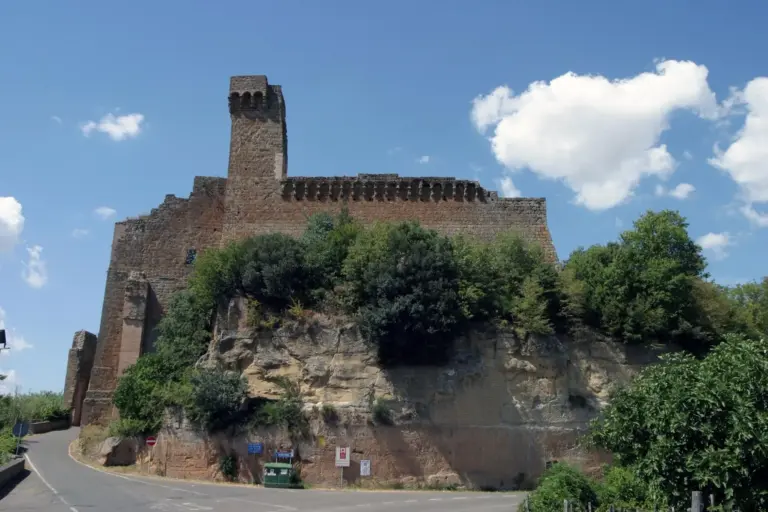
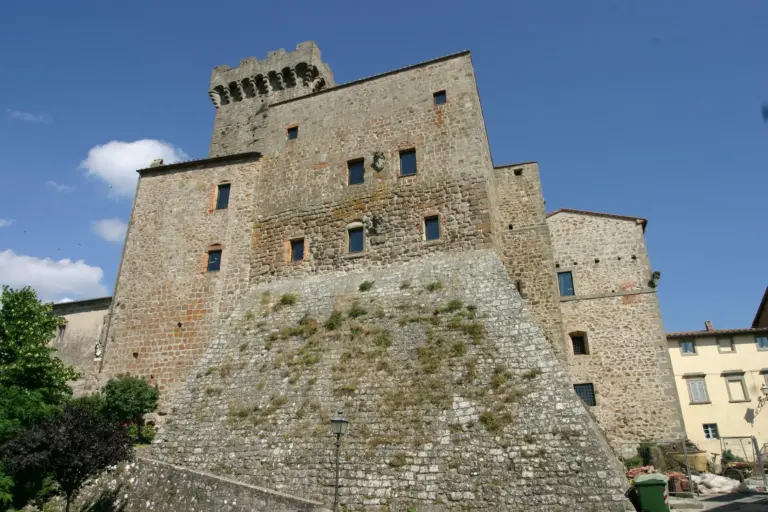
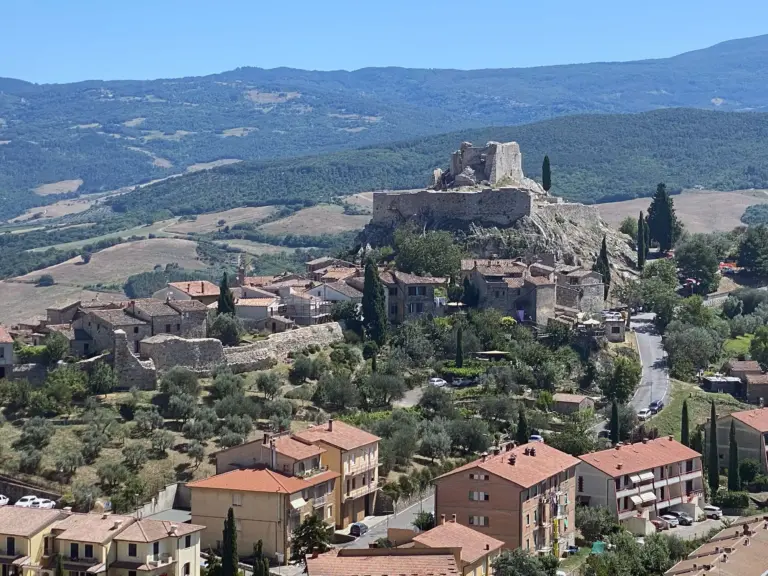
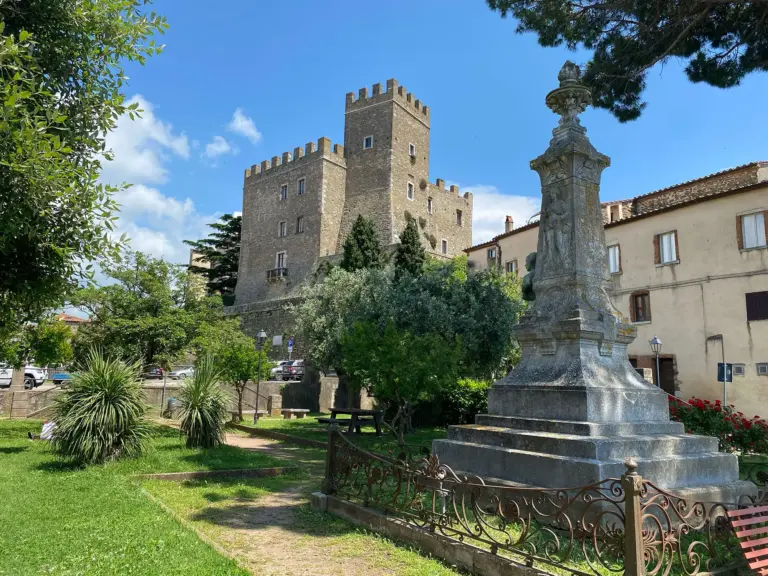
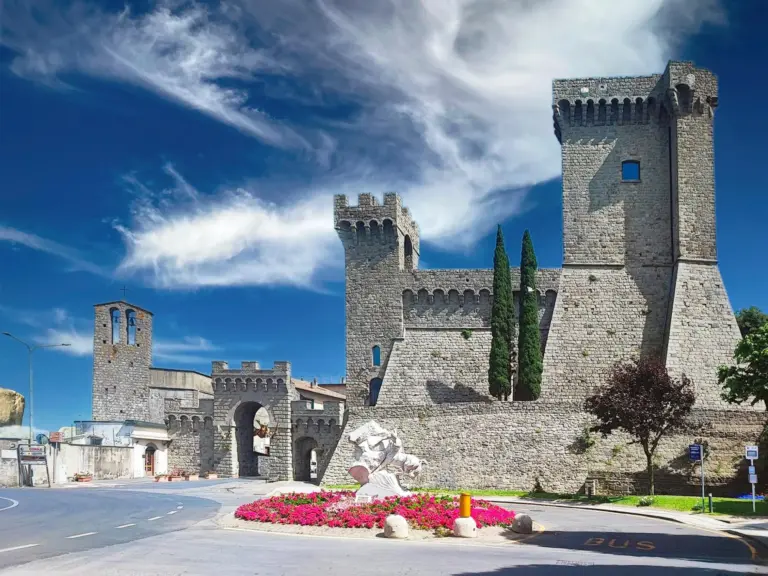
The Aldobrandeschi County had a decentralised structure: it included some eighty castles, with no real capital and no rigid hierarchy among its centres. According to many historians, this model, built on castles rather than cities, held back the growth of new towns in Maremma and limited the development of existing ones.
Origins: from the Lucca aristocracy to the counts of Roselle
The exact origins of the Aldobrandeschi are uncertain, but several theories link them to the Lombards. The earliest generations of the family, documented between the 8th and 9th centuries, belonged to the aristocracy of Lucca and moved in the circle of the city’s bishops. The recognised founder of the line is Eriprando, from whom the first known members of the family descend.
The turning point came in the mid-9th century with Ildebrando, recorded as count in 857, in the time of Emperor Louis II. Thanks to the comital title and to their ties with Carolingian power, the family shifted its centre of gravity to southern Tuscany, laying the foundations of what would become the great county of Maremma.
From Roselle to Sovana: the seats of the Aldobrandeschi
The first seat of Aldobrandeschi power in Maremma was Roselle, an ancient Etruscan and Roman city in a strategic position near the Via Aurelia. During the 10th century Roselle fell into a long decline, made worse, according to tradition, by Saracen raids, and the centre of the county moved inland to Sovana.
The decline of Roselle favoured the rise of Grosseto, also under the counts’ control: in 1138 the bishopric was moved from Roselle to Grosseto, which became the main town of the Maremma plain.
Alongside its core in Maremma, the family long kept scattered estates in other parts of Tuscany, in the Lucca area, in the Val di Nievole and in the Val d’Elsa, a legacy of its origins in Lucca.
Expansion: from the coast to Monte Amiata
Between the 11th and 13th centuries the Aldobrandeschi reached the height of their power. They extended their rule over the castles of Amiata and controlled a territory running from the sea to the mountains, facing powers such as Pisa, Siena, Orvieto and the Papacy. The rivers Ombrone, Albegna and Fiora, with their basins, marked the natural boundaries of their lands.
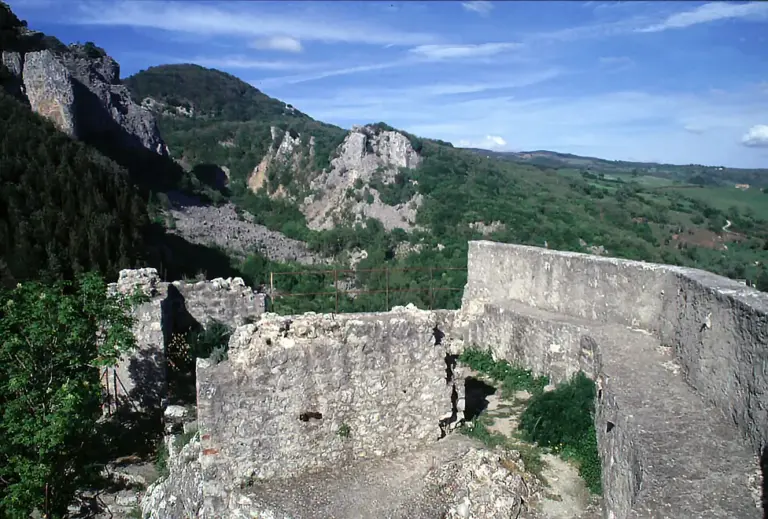
The heart of the domain was made up of towns such as Santa Fiora, Arcidosso, Sovana, Pitigliano, Sorano and Vitozza, together with strongholds on Amiata such as Castiglione d’Orcia, Piancastagnaio, Selvena and Roccalbegna.
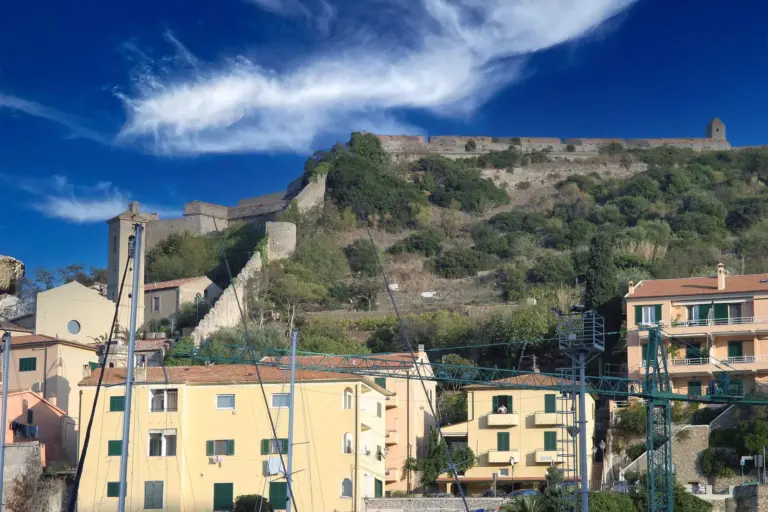
Towards the coast and the Albegna hills, the county included Manciano, Saturnia, Capalbio, Magliano in Toscana, Pereta, Marsiliana, Orbetello and Talamone, one of the few harbours on the Maremma coast. These castles reflect not only the family’s military power but also the size and geographical variety of its possessions.
The secrets of a long-lasting dynasty
The strategic position of their lands, combined with shrewd politics during the struggles between Church and Empire, helped the family consolidate its power. Internal solidarity, adaptability and a measure of opportunism were key to the long duration of their rule.
A widespread tradition claims that Pope Gregory VII, born Ildebrando di Soana in Sovana around 1020 and elected pope in 1073, was related to the Aldobrandeschi. The connection, however, is not supported by the documents: most historians believe the future pope came from a family of modest standing.
The Aldobrandeschi in the Divine Comedy
The family’s fame reached as far as Dante. In Canto XI of the Purgatorio, among the proud, the poet meets Omberto Aldobrandeschi, son of Guglielmo, the count Dante calls «gran Tosco» (“great Tuscan”). Omberto recalls with pride the ancient lineage of his blood and his own death at Campagnatico, where he was killed in 1259 in a clash with the Sienese.
«Io fui latino e nato d’un gran Tosco: / Guiglielmo Aldobrandesco fu mio padre»
Dante Alighieri, Purgatorio, Canto XI, lines 58–59
(“I was Italian, born of a great Tuscan: / Guglielmo Aldobrandesco was my father”)
The division of 1274: Santa Fiora and Sovana
In the 13th century pressure from Siena, Orvieto and the Papacy grew ever stronger. In 1274 the family split for good into two branches, each with its own county:
- County of Santa Fiora, with the lands of Amiata;
- County of Sovana, with Sovana, Pitigliano, Sorano and the lands of the Fiora and Albegna valleys.
Margherita Aldobrandeschi and the passage to the Orsini
The leading figure of the Sovana branch was Ildebrandino il Rosso (“the Red”, d. 1284), who tried to defend the county through marriages and alliances but faced constant hostility from Siena, the Papacy and the great Roman families.
On his death the inheritance passed to his daughter Margherita Aldobrandeschi, the last of the Sovana branch. The countess married several times: her husbands included Guy de Montfort and Nello Pannocchieschi, lord of Castel di Pietra and a central figure in the legend of Pia de’ Tolomei. Through Margherita’s daughter Anastasia de Montfort, wife of Romano Orsini, the county of Sovana passed to the Orsini, who made Pitigliano and Sorano their strongholds.
The advance of Siena
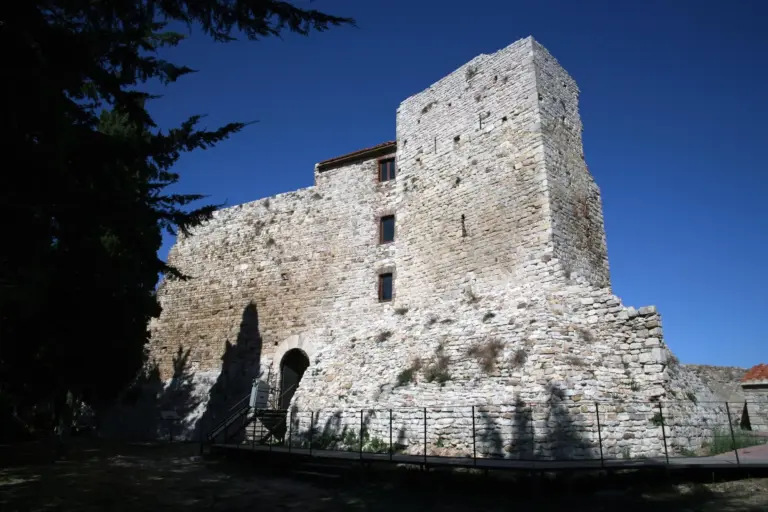
Meanwhile the Republic of Siena was taking castle after castle from the counts. Between the late 13th and the mid-14th century Grosseto, Talamone, Montemassi, Arcidosso (conquered in 1331) and many places on Amiata came under Sienese control. The Aldobrandeschi strongholds were often reinforced with a Sienese keep (cassero), still visible today at Roccalbegna and Grosseto.
Santa Fiora and the end of the dynasty
The Santa Fiora branch held out longest, keeping a small state on Amiata. The last count was Guido Aldobrandeschi, with whom the male line died out in the late 1430s. In 1439 his daughter Cecilia married Bosio Sforza, and the county of Santa Fiora passed to the Sforza, who ruled it until 1663, when they ceded it to the Grand Duke of Tuscany; their descendants, the Sforza Cesarini, kept the title.
So ended the story of a dynasty that had ruled Maremma for more than six centuries.
Map of the Aldobrandeschi castles
The map shows some of the main towns and castles linked to the Aldobrandeschi County, from the coast to Monte Amiata. Select a marker to read a short historical note and, where available, open the castle’s page.
Locations are approximate. Many castles changed hands several times between the Aldobrandeschi, Siena, Orvieto and the Orsini.
In summary
The Aldobrandeschi County ruled over a mosaic of places, from river valleys to the peaks of Amiata, helping to shape the political and territorial landscape of southern Tuscany. Its strongholds, many of which can still be visited, tell a story six centuries long: from the rise of the counts in the Carolingian age to the passage of their lands to the Orsini, Siena and the Sforza.